
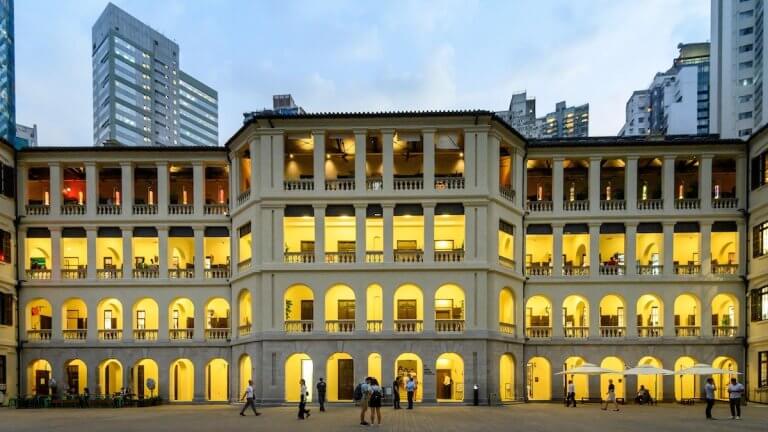
Eight years on from opening, Tai Kwun Centre for Heritage and Arts remains one of those rare projects that still feels as relevant — and radical — as it did on day one.
When we were first involved in shaping the heritage museum and visitor experience masterplan, the question wasn’t simply how to conserve a remarkable set of historic buildings. The real challenge was how do you transform a former Central Police Station compound — loaded with complex, and at times uncomfortable, histories — into a place people actively choose to spend time in? Obviously the bars and restaurants would be a huge draw, as would simply standing in a space in Central where you could look up and actually see sky rather than buildings. But the heritage would have to be step up and play its part in making it a tourist destination too.
What Tai Kwun got right — and continues to get right — is resisting the temptation to over-explain. It doesn’t behave like a traditional museum, nor does it dilute itself into a purely commercial lifestyle destination. Instead, it operates in that difficult middle ground: a cultural precinct where heritage, contemporary art, public space and lifestyle overlap.
From the outset, the ambition was to create a framework rather than a fixed narrative. A place where interpretation could sit lightly, where architecture does much of the storytelling, and where programming keeps the site alive long after opening day. In that sense, the “visitor experience” was never a finished product — it was a set of conditions for ongoing engagement.
Eight years later, that decision feels vindicated.
The site has matured. The patina of use is visible — not just on the fabric of the buildings, but in how people occupy the space. Office workers at lunch, families at weekends, tourists, artists, events, quiet moments in the courtyards. It has become part of the city’s rhythm rather than an object set apart from it.
Too often in our industry, we measure success at the point of launch: footfall, press coverage, awards. But the real test of a cultural project is whether it embeds itself into daily life — whether it earns repeat visitation without relying on novelty. And Tai Kwun has done that.
It’s also a reminder of something we return to often in our work: heritage projects succeed not when they are treated as finished artefacts, but when they are designed as living systems. Masterplanning, in this context, is less about control and more about setting the right parameters for change.
Looking back, it’s a project we’re so proud to have played a part in. Not because of any single design move, but because of the collective ambition to do something more than preserve the past.
To make it usable. Relevant. And, importantly, open-ended. Eight years in, that still feels like the project as a whole as been a landmark in Hong Kong’s, and to some extent Asia’s, heritage tourism landscape.